Special
How Duolingo Playfully Connects With Customers
Duolingo Campaign, INNOCEAN Indonesia
Duolingo knows how to have fun. The app was originally designed for language learning. But this language learning app deliberately chooses to engage with what customers are having fun with and talking about, rather than putting its messages forward. The green owl, Duo connects with customers in its unique, cheerful, and quirky way.
INNOCEAN surfaced such cheerfulness and quirkiness of the brand to expand in Indonesia with relevance to the local cultural context. Let's take a look at how the Duolingo brand found channels to seamlessly seep into every corner of Gen Z’s lives in the country and thus, shared a variety of stories through brand campaigns.
Where The Brand Finds Convergence With Cultural Context And Target Audience
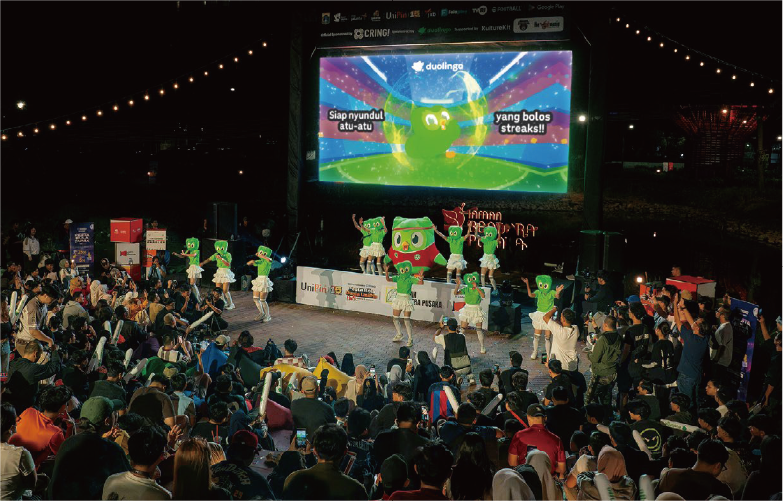
The core pillar of the campaign nested in where the brand finds convergence with cultural context and relevance and target audience. INNOCEAN Indonesia (IID) cleverly chose not to transform the brand personality itself – rather, the team consciously chose a refined approach to observe the cultural context, including but not limited to trending memes, fandom, music, and talk of the town. Then the campaign team pushed further to uncover what Gen Z finds fun and exciting, using social listening and cultural experiences to understand what truly resonates with them. IID has selectively engaged with its target audience in occasions where the Duolingo brand proactively reaches out to its audience and plays its part in seamlessly offering brand experience, rather than pulling the audience in front of the brand.
The essence of the Duolingo campaign was unearthing reasons why the brand should be the epicenter of the latest trend, instead of chasing fast-paced trends. Hence the ideation took off where the context of culture, the target audience, and the brand meet. Channels and formats were concluded only after finding the convergence, which clearly explains why few boundaries were set for execution. Memes in online spaces spread out to collaboration with different brands, while fandom to experience in physical spaces, and music and sports to learning and engaging experiences. Notably, the Duolingo campaign in Indonesia illustrated the potential of a campaign strategy ideated and materialized through a variety of outlets.
Memes Surrounding Two Green Owls - Onset Of Collaboration
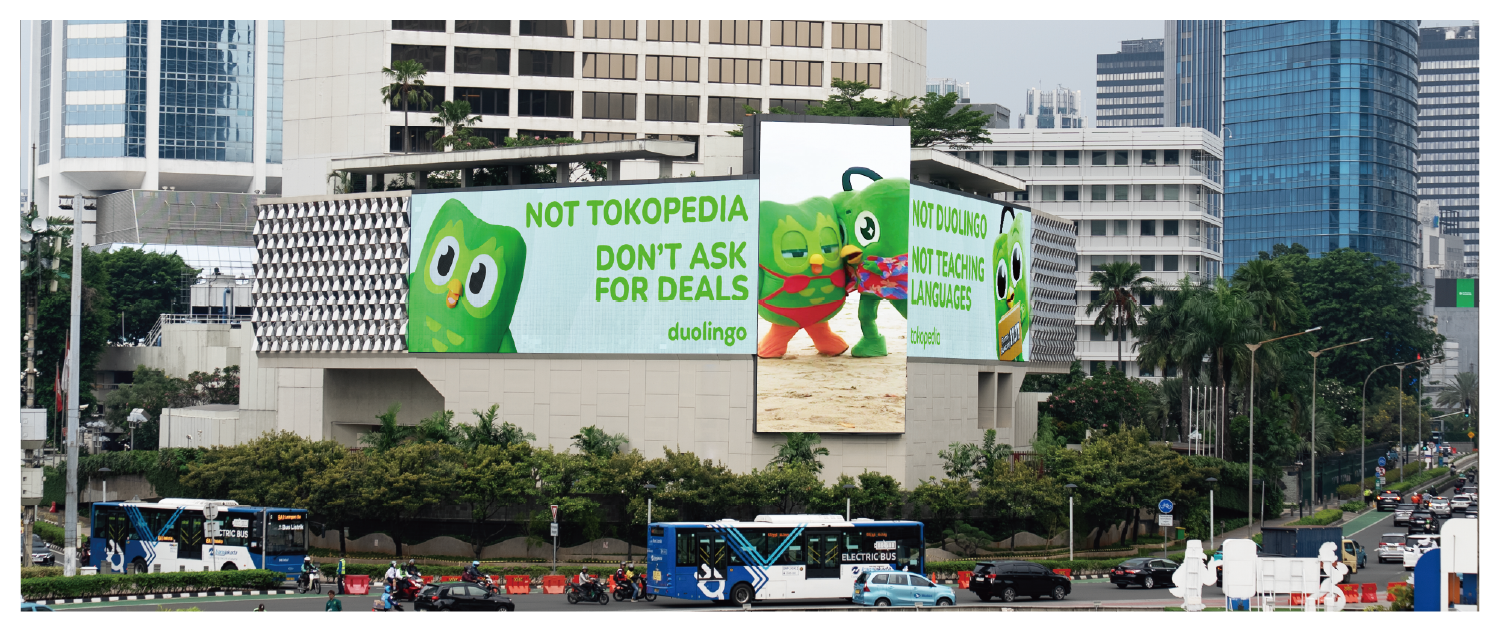
The major e-commerce platform in Indonesia, Tokopedia features a green-colored owl mascot, Toped. With an advent of Duolingo’s green owl mascot, Duo, the public rushed into creating memes, comparing between the two green-colored characters. IID embraced the opportunity, instead of giving lengthy explanations or finding a workaround. With the slogan, “Not Tokopedia / Bukan Duolingo” at the forefront, the brand campaign team has made a turnaround to spread out the meme to the wider public and furthermore, created a humorous and playful rivalry, swapping social media accounts of the two brands. With the campaign sprinkled with humor, the jokes started by the fans and public has expanded to clever collaboration between Duolingo and Tokopedia to open doors to enhance brand awareness.
Rivalry In Online Spaces Spilled Over To Blackpink Concert Arenas
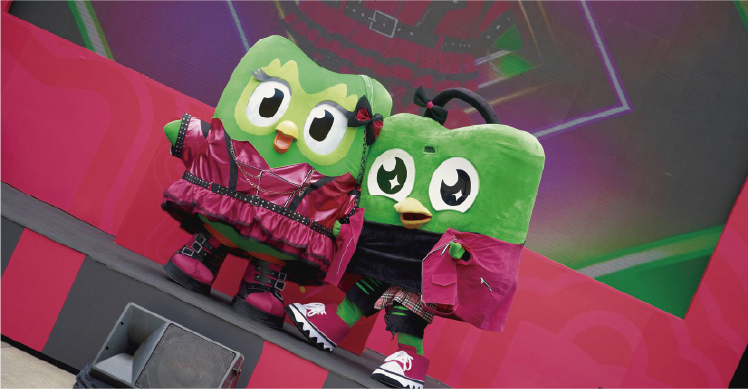
The humorous and playful rivalry with Tokopedia has spilled over to the Blackpink concerts. For the big day, the INNOCEAN campaign team drew up a plan to roll out a dance battle between Duolingo and Tokopedia characters in front of K-Pop fans. These two green look-alike owls, Duo and Toped, were having rows against each other and have boldly expanded the rivalry on social media spaces to physical spaces. The heat and vibe filling up the concert arena continued to spread with Instagram Reels. Duo shared the moment with K-Pop fans, waiting for their favorite artists, singing along with top chart songs, and dancing along the uplifting tunes. Duo wasn’t obviously the star of the show yet indulged itself in joyful moments with fans and shared memorable experiences to thus become true friends with them.
Language Learning Experience Channeled Through Niki’s Musical Pieces
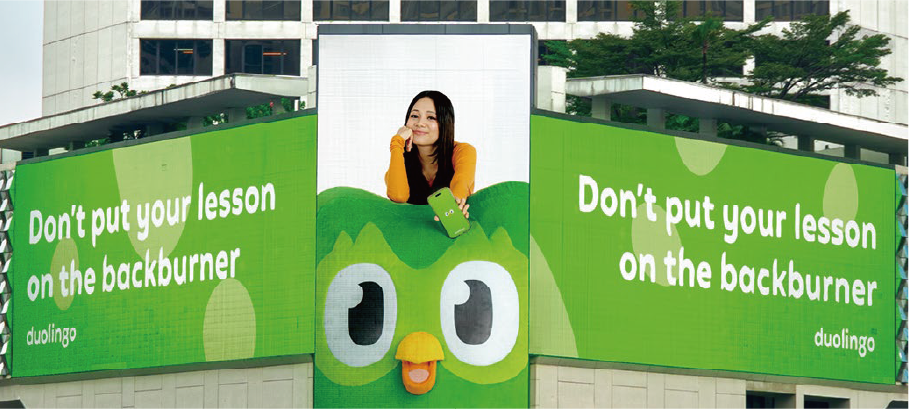
Niki started her artistic career in Indonesia and rose to global fame with her songs written and sung in English. Indeed, her stories resonated with the younger generations in her home who aspired to make their footholds in the grandiose global stage. IID took inspiration from the Indonesian-born artist’s popular track, “Backburner” to generate video clips and lyrics based contents and thus bridge musical pieces familiar to the younger-aged audience and language learning experience with Duolingo.
Duolingo Hijacked World Cup Halftime
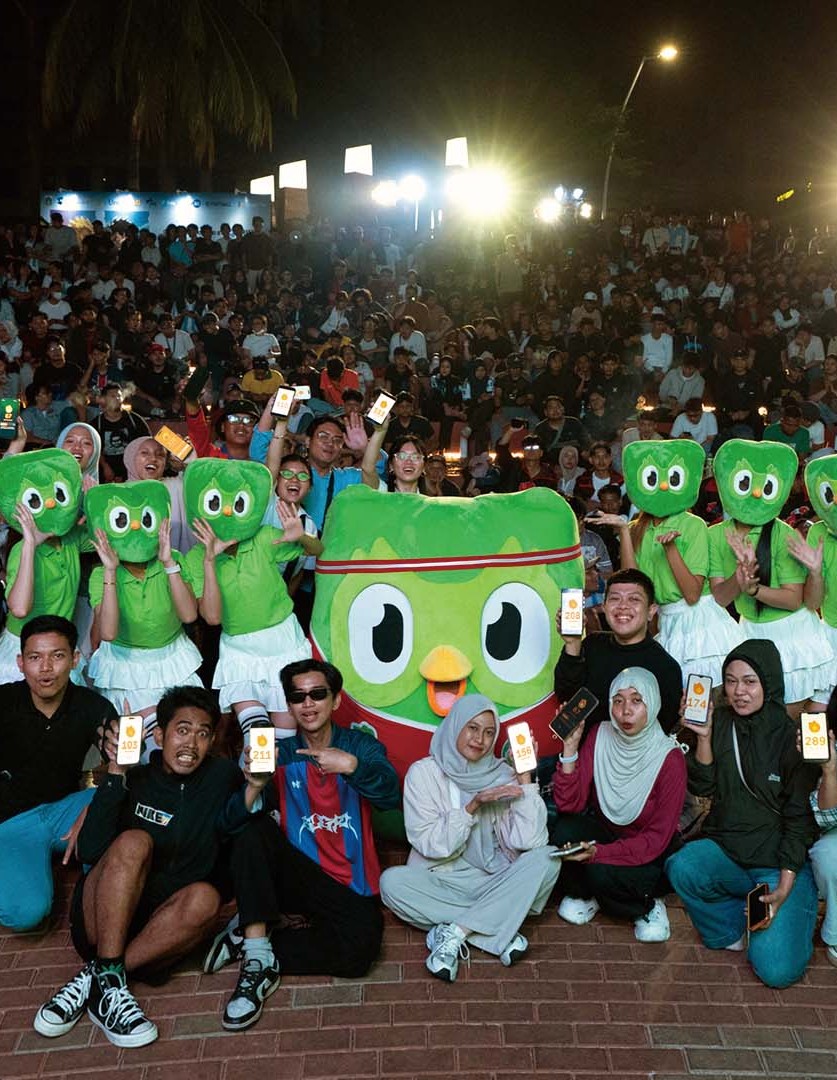
While the World Cup games can be festive events for many around the globe, the majority of brand managers should face their own moment of truth – fans are pleasantly distracted by the soccer games that almost all daily activities would practically pause for a few moments. Duolingo was no exception at all, with its learners leaving their learning habit behind during the World Cup games. But the Duolingo campaign team did not compete against the sports game event for attention. Instead, the campaign team patiently waited for halftime when fans take a breather from the intensity of the sports games.
Duo made a surprise appearance in front of the audience to dance and sing and deliver the core message, “Finally…it’s time you come back to me.” The unexpected hijack drew out laughter and more than one thousand audience on site opened the app to continue learning streaks and claim rewards. Those learners who continued language learning throughout the game event were rewarded with Duolingo brand-themed snacks and drinks as surprise gifts. IID seamlessly fed the Duolingo brand message into the vibe of excitement that its target audience was seizing and offered a playful reminder of the brand’s core experience, “continued learning.”
WRITER
Anne Aryanti
INNOCEAN Indonesia | Business Director

Q. Could you tell us about the core elements the campaign team keeps in mind when establishing localization standards for Indonesia, while balancing the consistency of the global brand’s messages?
What we localize is not the brand persona and message, but the cultural context. While Duolingo remains humorous, fun, engaging, yet sometimes random, the brand carefully observes to learn about memes, fandom, slang, music, and everyday conversations in the local communities. The key is not to squish the brand messages into what’s trending, but rather to find where Duo can organically blend into the cultural context enjoyed by many already.
Q. When IID first teamed up with Duolingo, what was the first problem statement made in the Indonesian market?
The goal for the campaign team was to build the Duolingo brand that would be culturally relevant to the younger-aged generation in Indonesia, not to remain being a plain language learning app. But admittedly, awareness level alone would have not been sufficient. We decided to steer away from heavy reliance on advertisement and devised a plan to be actively engaged in every corner of target audience’s lives, including their conversations and entertainment venues.
Q. How do you find the balance between the brand’s character Duo and the brand message? And what are the key items you factor in when leveraging the brand character.
Duo cannot be separated from Duolingo – it is the embodiment of Duolingo. The brand character shares humor, boldness, and tenacity with human touches. The rule is nothing complicated. Duo can be at the center of spotlight, but at the end of the day, the stories should connect to the core brand experience, including but not limited to learning, the streak to track learning progress, and language-related experience in everyday lives. After all, the brand character needs to have the brand message and the product definition with clarity, as well as humor and randomness.
Q. Resonance with younger generation has increasingly been highlighted today. For the Duolingo brand to blend with Gen Z in Indonesia, the first task would have been exploring what they liked and what they talked about. Where do you mostly find inspiration and insights from?
Any data and cultural experience would make useful insights. IID had the Duolingo campaign team, “Troops,” use social listening and insight tools to observe the latest trends, online conversations, and target audience behaviors, and share updates regularly. Most of all, Gen Z is making up the vast majority of the team. All of these helped us find out what was trending and why, and how and where Duolingo could engage with the target were baked into the campaign plan.
Q. The lookalike characters Duo and Toped may have cannibalized each other. Please tell us how and why you found opportunities, rather than risks?
The character featured by Tokopedia, Toped had already been the goofy green owl embraced and welcomed in Indonesia for fifteen years. When Duo first made its appearance, the audience would have first been confused between the two green owl characters, compromising Duo’s presence. But we took the circumstance as an “open invitation.” Rather than going against the tide, we deliberately chose to go with the tide to have popularity of Toped and confusion caused by two lookalike characters as the starting point to promote Duolingo. The meme first ignited from casual conversations and organically evolved into stories to engage with the target audience and eventually steered into the collaboration between the two brands.
Q. The campaign with Niki was remarkable for the touching story paired with fun elements. Connecting the Duolingo brand and the story of Niki who first started from Indonesia and made her way into the global stage, overcoming language barriers, what was the message you sought to share with the audience?
Niki has been building her global career through the medium of English and could resonate well with Duolingo. Some lyrics from her song, “Backburner” were nuanced that direct translation wouldn’t have been enough to get the message across. The campaign with the Indonesian-born global artist was designed to communicate that language learning shouldn’t simply be about word-by-word conversion, but about learning and understanding context, nuances, and culture. The campaign team transformed one of her popular tracks received well by Gen Z into fun and exciting learning experience to invite the target audience into experiencing what Duolingo was originally made for. If you start with favorite artists and songs, language learning would be blended into your everyday life, much like entertainment – this has been one of the significance and implications of the campaign.
Q. Even though Duolingo wasn’t the official sponsor, hijacking the Blackpink concert and the World Cup cheering scenes were fascinating for the cleverness in leveraging fandom culture. When capturing these cultural scenes for a brand to become a part, what are key policies to decide for Duolingo to step in?
We look for the “moment of cultural context” where the target audience and Duolingo can seamlessly converge – we choose to find where the target audience is for outreach, rather than inviting the audience. But obviously, you need more than the reaches. For instance, K-Pop fans and soccer fans reveal different behaviors, interests, and preferences for leisure time activities and entertainment so we carefully search where the culture and the target audience meet and conclude where the brand can add values. If we don’t find any, we won’t make any fuss to wedge in.
Q. Duolingo seems to have no limits when it comes to the format and scope of its campaigns spanning from shopping platforms to entertainment, and from online to offline. From the moment you identify an opportunity to the launch of the campaign, what do you prioritize throughout that process?
The top priority should be finding insight by connecting so-called “genuineness” of consumers, culture, and brand. Starting from insights gained, we define main ideas before we decide how to share stories through which channels. If we can share ideas that are relevant and relatable to the audience’s everyday activities, we don’t set limits to channels or formats. Needless to say, we face the next challenge of bringing these ideas to life within a limited budget (laughs).
Q. The campaign team has showcased engagement with the target audience within a wide variety of cultural context, ranging from online memes, K-Pop, and sports. What could be the next areas of exploration to create novel touchpoints?
We see the potential for Duolingo to go beyond simple responses to fleeting cultural moments to create deeper, longer-lasting connections with our target audience. These days, we’re exploring community-building and outdoor experiences, while we’re tapping on measures to bridge Duolingo closer to our target audience throughout Indonesia, as well as in Jakarta. Ultimately, the Duolingo team’s goal is to grow from a brand that engages with culture and evolve into a brand that is woven into people’s daily lives across Indonesia.